

Disclosure: This post may contain affiliate links. If you buy through these links, I may earn a small commission at no extra cost to you.
There was a time when studying felt incredibly frustrating for me.
Not because I wasn’t trying.
But because no matter how many hours I studied, information kept disappearing from my brain.
I’d finish a chapter feeling confident.
Then two days later?
Most of it felt completely unfamiliar again.
Sometimes I’d walk into an exam knowing I had studied something before, but when I actually needed the information…
my mind went blank.
For a long time, I genuinely thought memory was the problem.
But eventually I realized something important:
The problem wasn’t my memory. The problem was how I was trying to learn.
Once I started using a few simple memory techniques, remembering information became much easier.
Not perfect.
But dramatically better.
If you’ve ever wondered how to remember what you study for exams, remember information faster, and stop forgetting everything after a few days, these are the techniques that genuinely helped me.
Why We Forget What We Study

For a long time, I thought forgetting meant I wasn’t smart enough.
Turns out, forgetting is normal.
Here’s something I wish someone had told me earlier:
Your brain constantly decides:
“Is this information important enough to keep?”
If information isn’t revisited, used, or retrieved…
your brain slowly removes it.
That’s why cramming often feels effective initially but fails later.
The goal isn’t studying more.
The goal is making your brain revisit information often enough that it decides to keep it.
Once I understood that, my study methods completely changed.
1. Stop Reading Passively

This was probably my biggest mistake.
I used to reread the same chapters repeatedly.
It felt productive.
But I wasn’t forcing my brain to remember anything.
That’s when I discovered Active Recall.
What I Do Now
- Read topic once
- Close notebook
- Explain topic from memory
- Write what I remember
- Check mistakes afterward
At first it felt harder.
And honestly?
That difficulty was actually a good sign.
Because difficult retrieval creates stronger memory formation.
Your brain remembers information better when it retrieves information instead of simply rereading it.
This became one of the most effective ways to remember what I study for exams.
2. Study in Smaller Sessions

I used to believe memory improved if I simply studied longer.
The opposite happened.
What surprised me was this:
After extremely long study sessions, I often remembered less, not more.
Now I usually study in shorter sessions.
Typically:
- 25–50 minutes studying
- Short break
- Repeat
This keeps my brain fresher and reduces mental fatigue.
A simple Pomodoro timer helped me stay consistent without feeling overwhelmed.
3. Teach the Topic to Yourself

This sounds strange.
But this technique works incredibly well.
Whenever I finish learning something, I pretend I’m teaching someone else.
Sometimes I explain it out loud.
Sometimes I write it.
Whenever I struggle to explain something clearly, I instantly know what I don’t fully understand.
If you can’t explain something simply, you probably don’t understand it deeply enough yet.
This improved both memory and understanding.
4. Use Spaced Repetition

This changed how I revised completely.
Before using spaced repetition, I kept confusing recognition with memory.
Something looked familiar.
So I assumed I knew it.
Not true.
Now I revisit information multiple times.
Example:
- Day 1 → Learn topic
- Day 3 → Quick review
- Day 7 → Review again
- Day 14 → Test myself
Each review becomes shorter.
But memory becomes stronger.
Spaced repetition is one of the most powerful memory techniques for long-term learning.
5. Connect New Information to Something You Already Know
The brain loves connections.
Whenever I connected new information with familiar things, remembering became easier.
Examples:
- Linking science concepts with daily life
- Connecting historical events together
- Relating formulas to practical examples
Random information disappears quickly.
Connected information usually stays longer.
6. Write Less, Think More
I used to create pages and pages of notes.
Honestly?
Most of them didn’t help much.
I realized I was creating beautiful notes…
not strong memory.
Now I focus more on:
- key concepts
- memory triggers
- practice questions
- understanding
Good studying is not about writing more. It’s about remembering more.
That change saved enormous amounts of time.
7. Use Practice Questions Much Earlier
This was another mistake I made.
I treated practice questions like something you do after finishing studying.
Turns out:
Practice questions ARE studying.
Now I start solving questions much earlier.
Because questions force retrieval.
And retrieval strengthens memory.
That’s why practice questions usually work much better than passive rereading
8. Sleep More Than You Think You Need
I ignored this advice constantly.
Especially during exams.
I thought:
“Less sleep = more study time.”
Looking back…
that trade-off was terrible.
Whenever I sleep properly:
- concentration improves
- recall improves
- studying feels easier
A tired brain struggles to remember information no matter how hard you study.
Sleep matters far more than most students realize
9. Remove Distractions While Studying
I underestimated this for years.
Every notification interrupts focus.
Every phone check breaks concentration.
Now I usually:
- put my phone away
- study in focused blocks
- avoid multitasking
- close unnecessary tabs
Memory improves when attention improves.
10. Review Before You Forget
Most students review after forgetting everything.
I used to do this too.
Now I review while information still feels somewhat fresh.
Even short reviews help enormously.
Sometimes 5 minutes is enough.
Because preventing forgetting is easier than relearning everything.
Common Memory Mistakes Students Make
I made all of these mistakes:
- passive rereading
- cramming before exams
- studying for hours without breaks
- skipping reviews
- multitasking
- poor sleep habits
- relying only on highlighting
Remembering information is usually more about technique than intelligence.
Study Tools That Helped Me Remember More
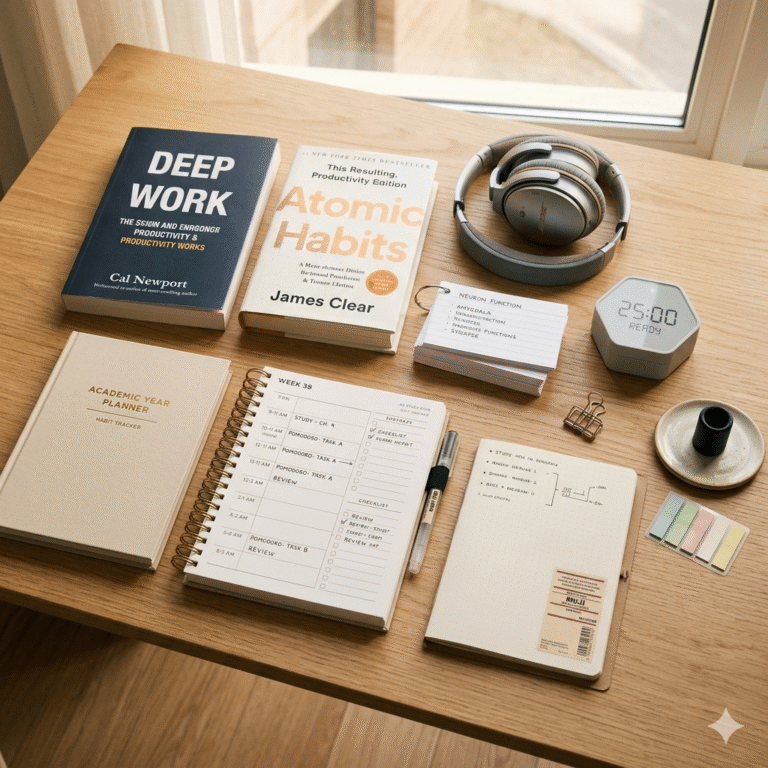
These tools didn’t magically improve memory.
But they made learning easier.
Helpful Tools
Helped me build consistent study systems.
Showed me how distractions quietly damage concentration.
Extremely useful for active recall and spaced repetition.
Helped me stay focused without checking my phone constantly.
Made review sessions easier to organize.
My Personal Memory Routine
Whenever I learn something new, this is usually what I do:
- Understand concept
- Use active recall
- Explain from memory
- Solve questions
- Review later
- Repeat consistently
Simple.
But this routine helped me remember far more than endless rereading.
FAQ
How can I remember what I study fast?
Use active recall, practice questions, and focused study sessions instead of passive rereading.
How can I remember what I study for exams?
Review information regularly, use spaced repetition, and test yourself often.
Why do I forget what I study quickly?
Usually because information isn’t being reviewed enough or you’re relying too much on passive studying.
How do top students remember so much?
Most high-performing students use active recall, spaced repetition, practice testing, and consistent revision.
Final Thoughts

For years, I thought memory was something you either had or didn’t have.
Now I think differently.
Memory is mostly built through repetition, retrieval, and consistency.
The biggest change happened when I stopped asking:
“How can I study more?”
And started asking:
“How can I make information easier to remember tomorrow?”
Because at the end of the day:
Studying more means very little if nothing stays with you afterward.
And once I understood that…
learning became much less frustrating.