

Disclosure: This post may contain affiliate links. If you buy through these links, I may earn a small commission at no extra cost to you.
There was a time when creating a study schedule felt more productive than actually studying.
Seriously.
I’d spend hours building the perfect timetable.
Color-coded subjects.
Beautiful planners.
Detailed hourly schedules.
Everything looked amazing.
For about two days.
Then reality happened.
I missed one study session.
Fell behind.
Got overwhelmed.
And eventually stopped following the schedule completely.
The frustrating part?
The problem wasn’t a lack of effort.
The problem was that my study schedule looked good on paper but didn’t fit real life.
Eventually, I realized something important:
A study schedule only works if you can actually follow it consistently.
Once I stopped trying to create the perfect study timetable and started building a realistic study plan, everything became much easier.
Not perfect.
But much more sustainable.
If you’ve been searching for how to create a study schedule, how to create a study timetable, or how to create a study plan for exams, this is the approach that genuinely helped me.
Why Most Study Schedules Fail
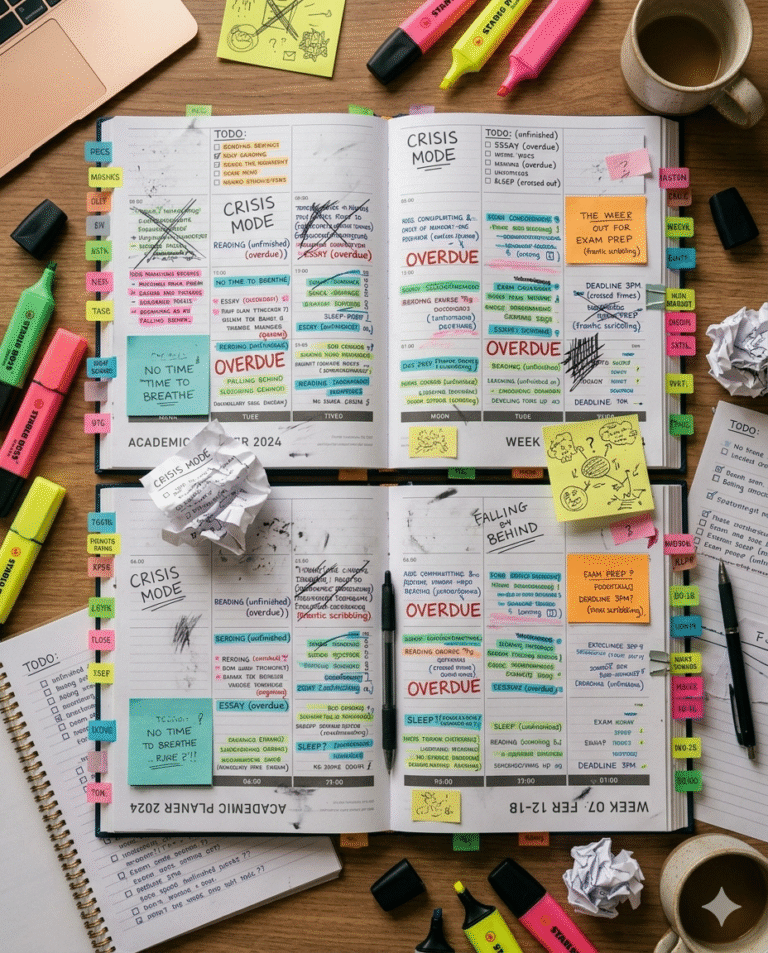
For years, I thought I lacked discipline.
Now I think the bigger problem was unrealistic planning.
Most students create schedules based on their ideal self.
Not their actual life.
Common mistakes include:
- Scheduling every hour of the day
- Studying too many subjects daily
- Ignoring breaks
- Creating unrealistic goals
- Leaving no room for unexpected events
- Treating every day like exam week
The best study schedule isn’t the most ambitious one. It’s the one you’ll still be following next week.
That mindset changed everything for me.
1. Start With Your Available Time
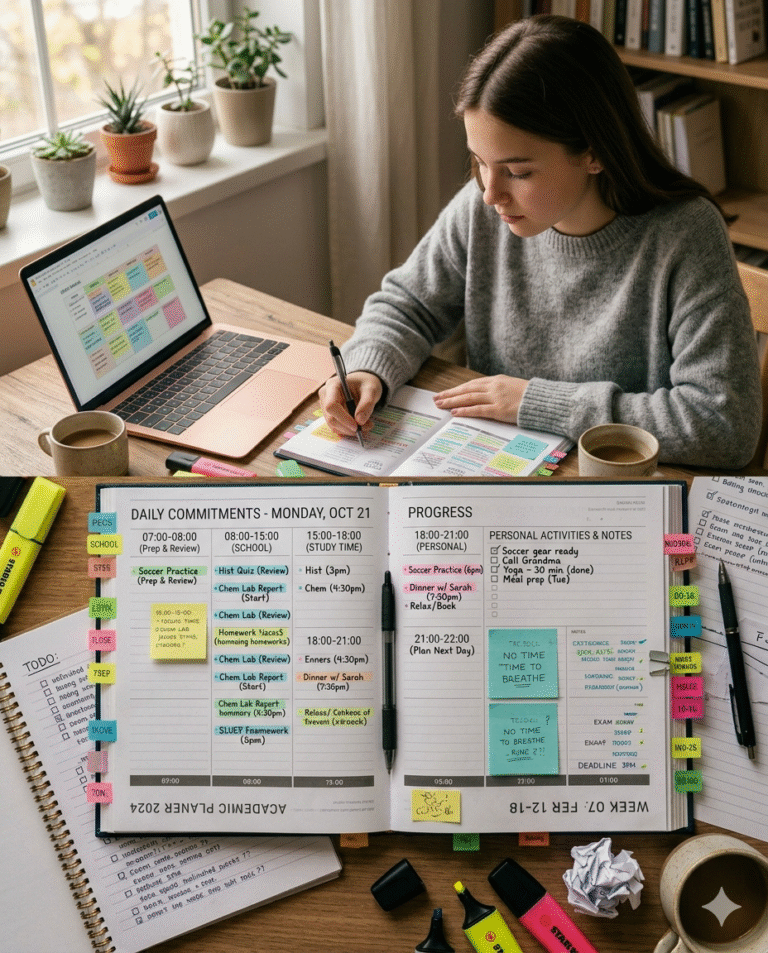
This was my biggest mistake.
I used to create schedules first and think about available time later.
Now I do the opposite.
Before creating a study schedule, ask:
- How many hours are realistically available?
- What commitments already exist?
- When do I have the most energy?
For example:
- School: 8 AM – 3 PM
- Homework: 1 hour
- Sports: 1 hour
- Family responsibilities: 1 hour
That automatically limits study time.
And that’s okay.
A realistic schedule always beats an impossible one.
2. Create a Study Plan Around Energy, Not Just Time
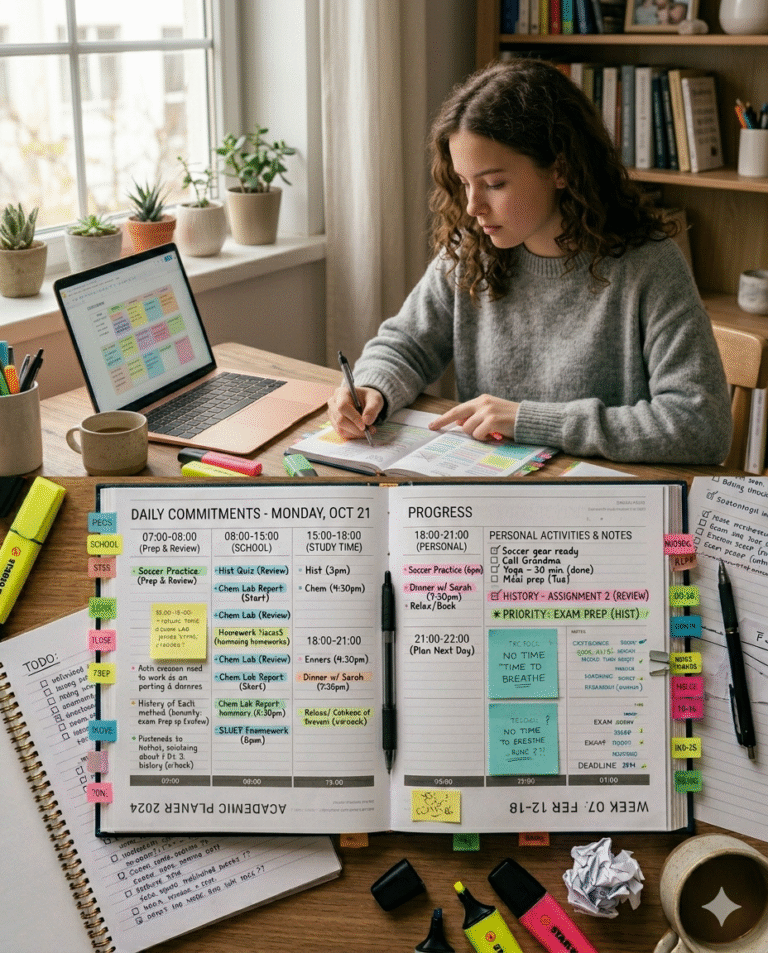
This improved my productivity dramatically.
I noticed difficult subjects felt much easier during high-energy hours.
Now I schedule my toughest work when my brain is freshest.
High-Energy Hours
- Math
- Science
- Physics
- Problem-solving subjects
Lower-Energy Hours
- Revision
- Reading
- Flashcards
- Easy assignments
Your study routine should match your energy levels, not fight against them.
3. Use Time Blocks Instead of Hour-by-Hour Planning
One thing I noticed:
The more detailed my timetable became…
The faster I stopped following it.
Every small delay created a chain reaction.
If I missed one task, the entire day felt ruined.
Earlier my timetable looked like this:
- 4:00–4:20 Math
- 4:20–4:40 Science
- 4:40–5:00 English
It felt stressful.
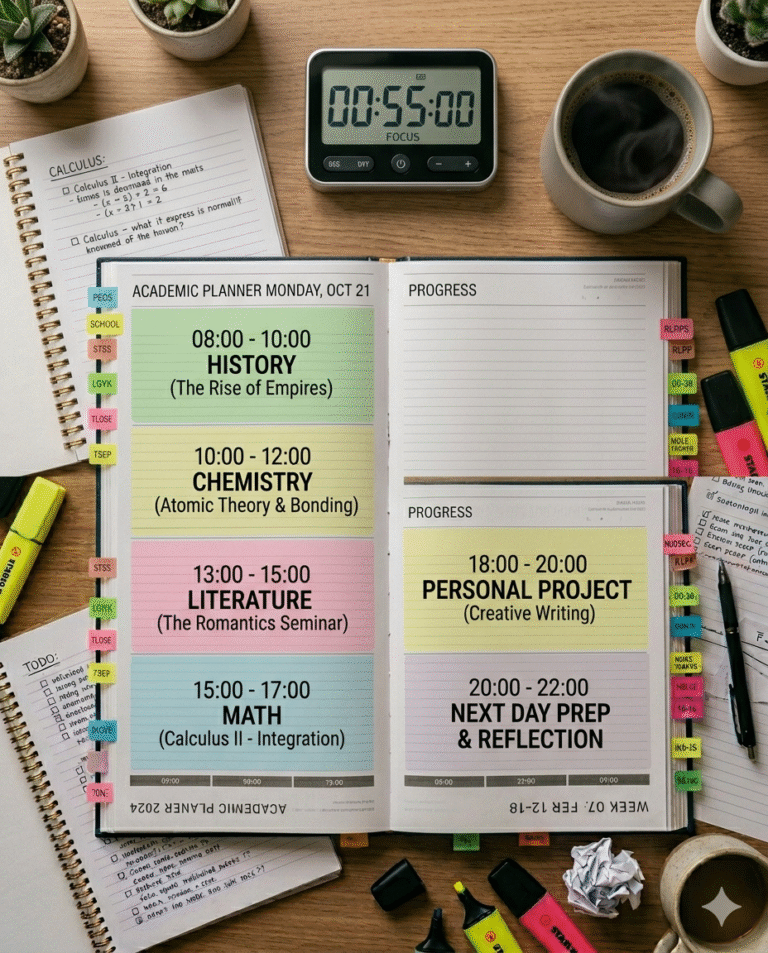
Now I use larger study blocks.
Study Schedule Example
4:00–5:00 PM
Math Practice
5:00–5:15 PM
Break
5:15–6:15 PM
Science Revision
6:15–6:30 PM
Break
6:30–7:00 PM
Flashcards & Review
This feels much easier to follow.
4. Prioritize Your Most Important Subjects
One mistake I made repeatedly:
Giving every subject equal attention.
I used to spend extra time on subjects I already liked.
Meanwhile, the subjects that actually needed attention kept getting ignored.
Ask yourself:
- Which subjects are weakest?
- Which exams are coming first?
- Which topics need the most work?
Your study plan should reflect priorities.
Not guilt.
Study what needs attention most, not just what feels comfortable.
5. Create a Study Schedule for Exams Differently
Exam season requires a different strategy.
When exams are close:
- Increase revision time
- Add practice questions
- Use active recall
- Reduce unnecessary tasks
Instead of constantly learning new topics, focus more on retention and practice.
This helped me avoid panic during exam weeks.
6. Schedule Breaks Before You Need Them
This sounds simple.
But it changed a lot.
Earlier I took breaks only when exhausted.
Now I plan them in advance.
Examples:
- 25 minutes study + 5 minutes break
- 50 minutes study + 10 minutes break
Breaks aren’t laziness.
They’re part of the system.
A schedule without breaks usually becomes a schedule you stop following.
7. Leave Empty Space in Your Schedule
I never used to do this.
Every hour was packed.
Then one unexpected event ruined everything.
Now I intentionally leave buffer time.
Examples:
- 30 minutes flexible study time
- Catch-up session on weekends
- Extra revision block
This makes the study schedule much more realistic.
Life happens.
Your timetable should be able to survive it.
8. Use a Weekly Study Planner Instead of Only Daily Planning
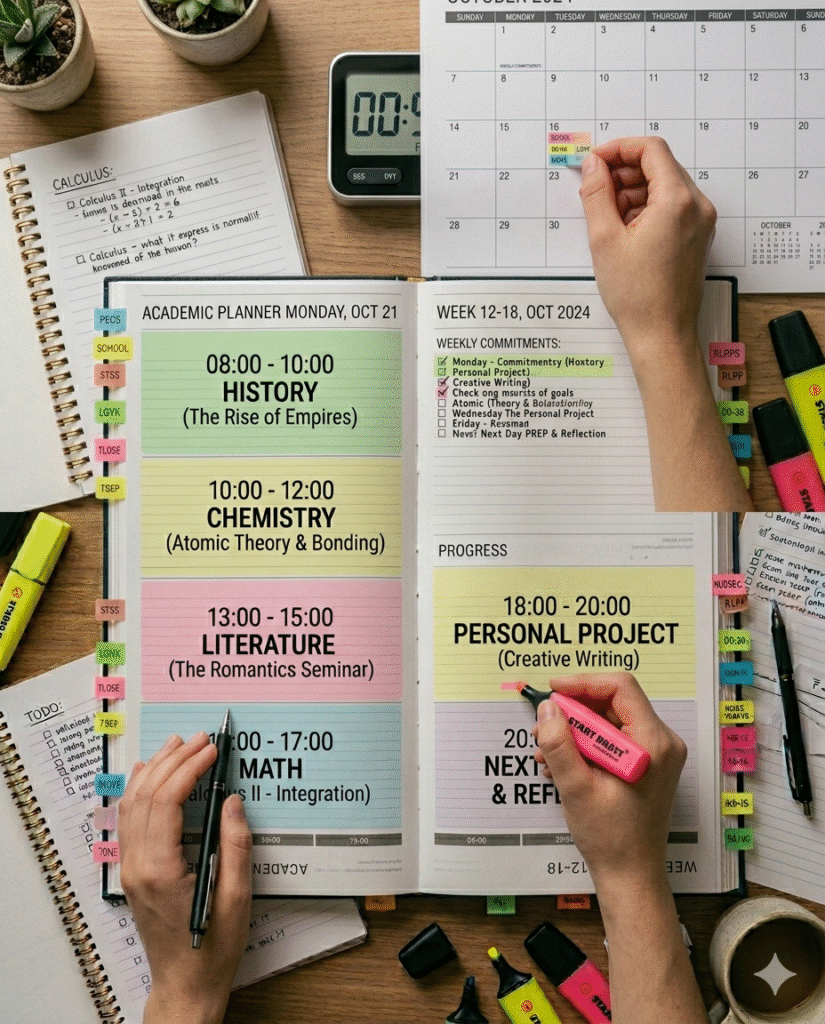
Life rarely follows a perfect daily schedule.
That’s why weekly targets usually work better than rigid hourly plans.
Daily schedules often fail because things change unexpectedly.
Instead of saying:
“I must study Biology at exactly 4:00 PM.”
Try:
“I’ll complete Biology Chapters 3 and 4 this week.”
This gives flexibility without losing progress.
A weekly study planner helped me organize subjects much more effectively.
9. Keep Your Study Routine Simple
One thing I noticed:
Complicated schedules create stress.
Simple schedules create consistency.
A basic study routine usually includes:
- Study time
- Breaks
- Revision
- Practice questions
That’s enough.
You don’t need a complicated color-coded system to succeed.
Simple systems are usually easier to maintain than perfect systems.
10. Review and Adjust Every Week
This might be the most important step.
Most students create a study timetable once and never update it.
I used to do that too.
Now every week I ask:
- What worked?
- What didn’t work?
- Which subjects need more time?
- Where am I falling behind?
Small adjustments keep the schedule useful.
A study schedule should evolve as your workload changes.
Common Study Schedule Mistakes
I made all of these:
- Creating unrealistic plans
- Studying too many subjects daily
- Ignoring breaks
- Scheduling every minute
- Copying someone else’s timetable
- Not reviewing progress
- Trying to be perfect
Most schedule failures come from unrealistic expectations.
Not a lack of discipline.
Study Tools That Helped Me Stay Organized
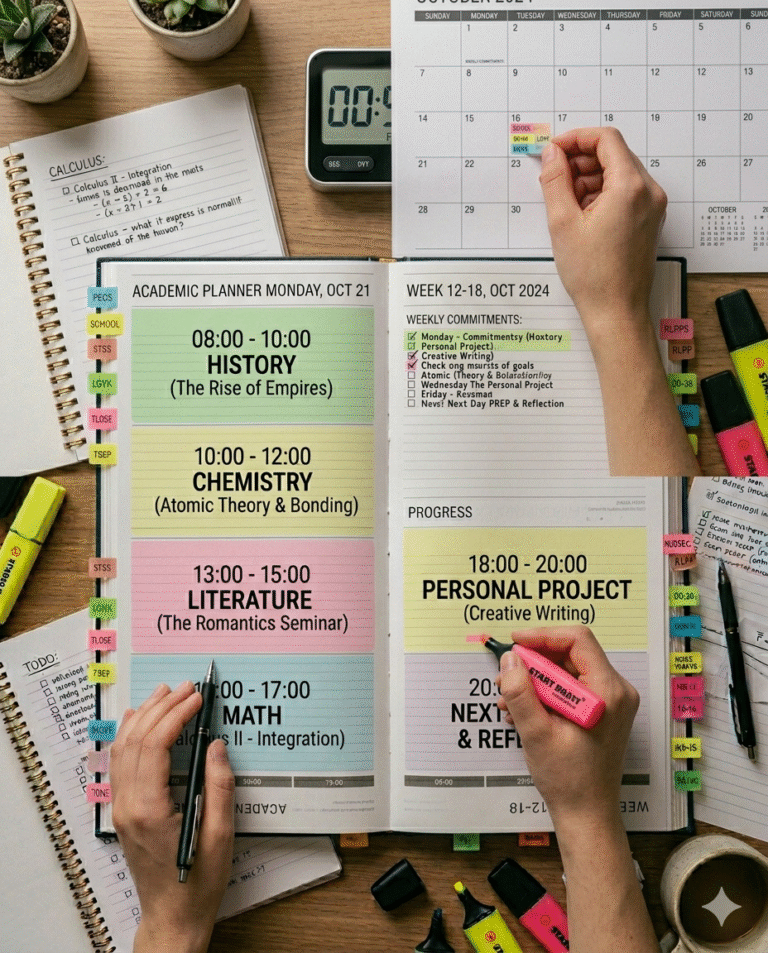
These tools didn’t magically make me productive.
But they made planning easier.
Helpful Tools
Weekly Study Planner
Helps organize subjects, goals, and revision sessions.
Time Blocking Planner
Makes larger study blocks easier to manage.
Whiteboard Calendar
Useful for tracking deadlines and exam dates.
Visual Pomodoro Timer
Keeps study sessions focused and manageable.
Printable Study Planner
Helps break large goals into smaller weekly tasks.
The goal isn’t to create the perfect schedule. It’s to create one that’s easy to follow consistently.
My Personal Study Routine
This is roughly what I follow:
- Check weekly goals
- Pick the highest-priority subject
- Study in focused blocks
- Take planned breaks
- Review completed work
- Prepare for tomorrow
Simple.
But realistic enough to maintain.
FAQ
How do I create a study schedule that works?
Start with available time, prioritize important subjects, and build realistic study blocks with breaks.
How do I create a study timetable for exams?
Focus more on revision, active recall, practice questions, and weaker subjects.
How many hours should I schedule for studying?
The best schedule is the one you can follow consistently. Quality matters more than total hours.
Should I study every subject every day?
Usually not. Prioritize subjects based on exams, weaknesses, and workload.
Final Thoughts

For years, I thought successful students followed perfect schedules.
Now I think something different.
Successful students usually follow realistic schedules consistently.
The biggest improvement happened when I stopped asking:
“What’s the perfect study timetable?”
And started asking:
“What’s the simplest schedule I can actually follow every day?”
Because at the end of the day:
A good study schedule isn’t the one that looks impressive. It’s the one that gets used.
And once I understood that…
planning became much less stressful and studying became much more consistent.