

Disclosure: This post may contain affiliate links. If you buy through these links, I may earn a small commission at no extra cost to you.
There was a time when I believed taking more notes meant learning more.
So every class looked the same.
Pages filled with sentences.
Every important line highlighted.
Every definition copied word for word.
By the end of the lecture…
My notebook looked impressive.
But when exam time came?
I realized I couldn’t actually remember much of what I’d written.
And honestly, that confused me.
I wasn’t avoiding the work.
I was putting in effort every single time.
But I was using a note-taking method that kept my hands busy instead of my brain.
Eventually I realized something important:
Good study notes aren’t the ones with the most words. They’re the ones that make learning easier later.
Once I changed the way I took notes, studying became faster, revision became easier, and I stopped rewriting everything before every exam.
If you’ve been searching for how to take effective study notes, how to take effective notes, or how to effectively take notes, these are the methods that genuinely helped me.
Why Most Students Take Notes the Wrong Way
For years, I thought note-taking meant writing everything.
Now I think that’s one of the biggest mistakes students make.
Common problems include:
- Copying the textbook word for word
- Writing every sentence the teacher says
- Highlighting almost everything
- Never reviewing notes later
- Spending more time decorating notes than understanding them
Your notes should help your future self learn faster—not create more work.
That mindset completely changed how I studied.
1. Don't Copy Everything You Read
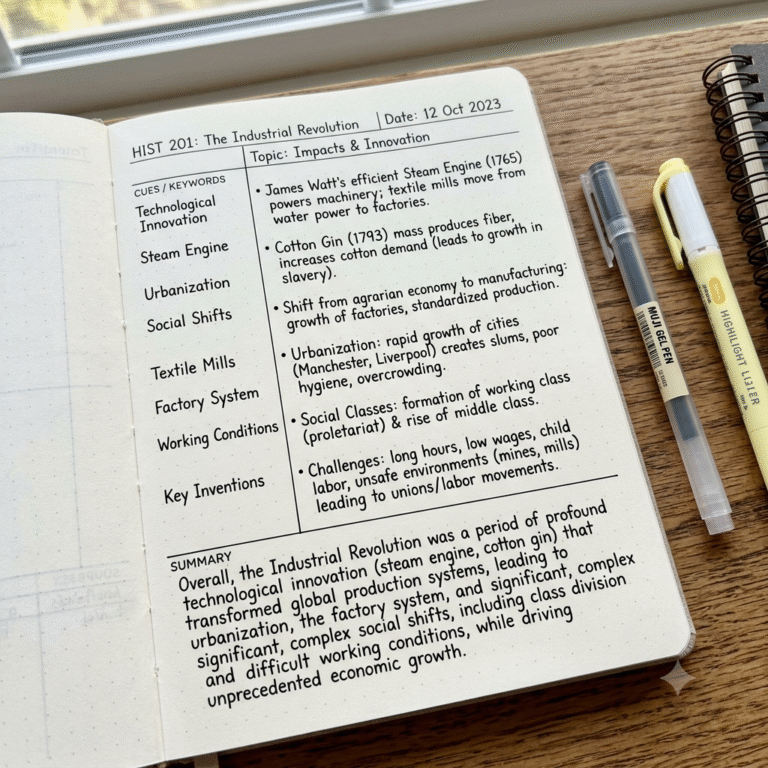
This was my biggest mistake.
Whenever I opened a textbook, I felt like every sentence was important.
So I copied almost all of it.
Hours later…
I had pages of notes.
But very little understanding.
Now I ask one simple question before writing anything:
“Will I actually need this to remember the topic later?”
If not…
I simply skip it.
Less writing. More thinking.
2. Use the Cornell Note-Taking Method
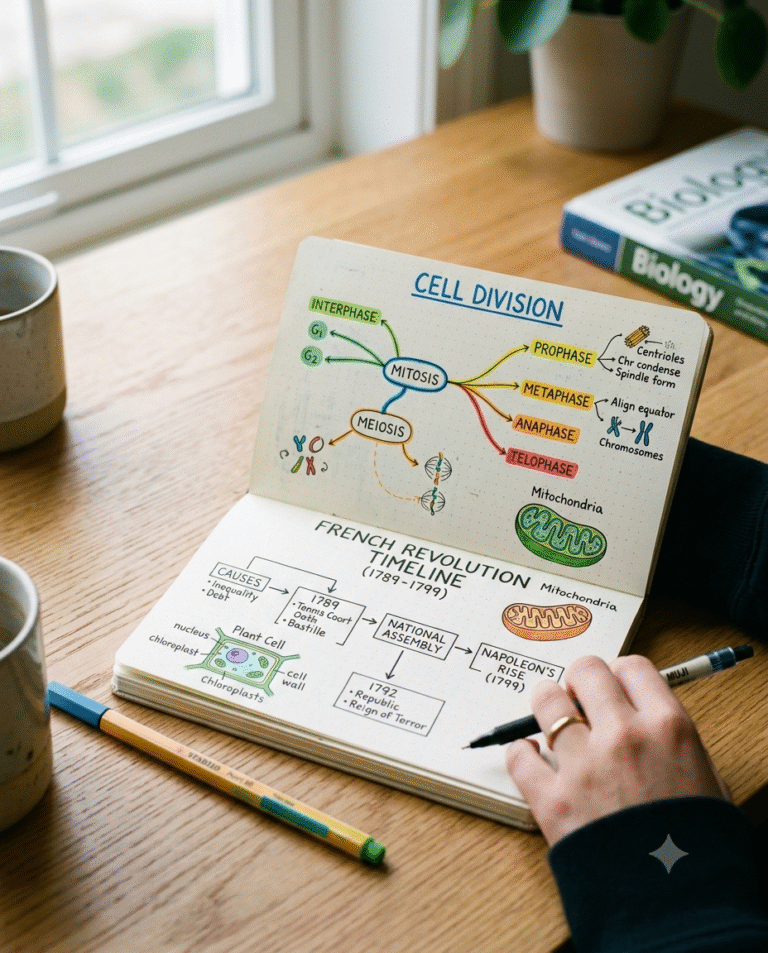
This became one of my favorite systems.
Instead of random pages, I divide my notes.
- Main notes on the right
- Keywords or questions on the left
- Short summary at the bottom
Later, I try covering the main notes and answering from memory.
It quietly turns revision into active recall.
No extra effort needed.
3. Write in Your Own Words
Whenever I copied things exactly as written…
I forgot them quickly.
But when I rewrote them in simple language…
I actually understood them.
Now I often do this:
After reading one section, I close the book and try to explain it like I’m teaching a friend.
Whatever I can explain clearly…
I write that.
If I can’t explain it simply, I know I don’t understand it yet.
4. Use Visual Notes for Difficult Topics
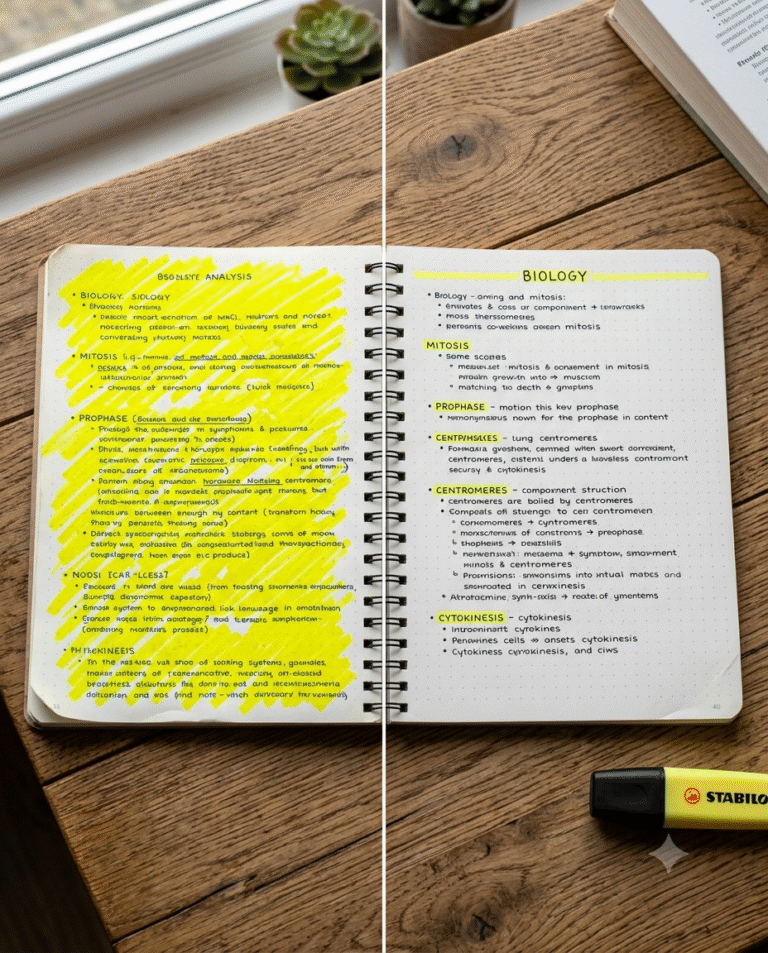
Some topics just don’t fit paragraphs.
For those, I use:
- Flowcharts
- Mind maps
- Tables
- Diagrams
- Timelines
Especially for subjects like biology, history, and geography.
Sometimes one diagram honestly replaces an entire page of notes.
5. Highlight Less Than You Think

I used to highlight almost everything.
Eventually…
My pages turned completely yellow.
Nothing stood out anymore.
Now I only highlight:
- Formulas
- Key definitions
- Difficult concepts
- Exam keywords
If everything is important, nothing is important.
6. Create Notes That Are Easy to Revise
Earlier my notes were long paragraphs.
Revision used to feel painful.
Now I keep it simple:
Headings. Bullet points. Short lines. Space.
Nothing fancy.
And honestly, future me thanks present me for this every time.
7. Use Questions Instead of Statements
This one surprised me too.
Instead of writing:
“Photosynthesis converts sunlight into energy.”
I write:
“How does photosynthesis produce energy?”
It changes everything.
Questions force your brain to think.
And thinking improves memory.
8. Review Notes Before You Forget
Earlier, I made notes and never looked at them again.
Big mistake.
Now I review:
- Same day (quick glance)
- A few days later
- Before exams
Even a 5-minute review makes a huge difference.
9. Don't Make Every Page Beautiful
I used to get inspired by aesthetic notes online.
But real studying is not always aesthetic.
Sometimes messy notes are more powerful than perfect ones.
So now I focus on clarity first.
Always.
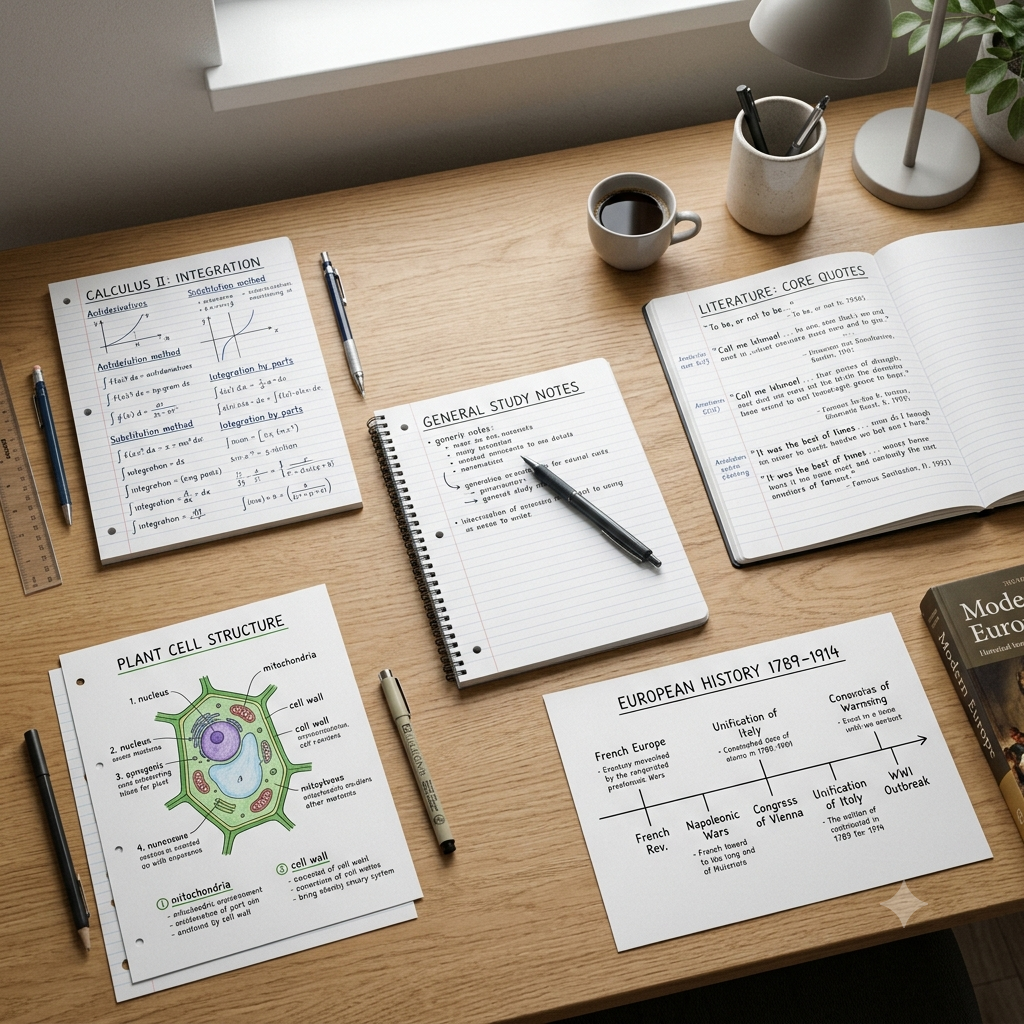
10. Adapt Your Notes to the Subject
Every subject needs a different style.
For example:
For Math, I rely more on solved examples and a small mistake log.
For Science, diagrams and concept summaries help the most.
For History, I usually stick to timelines and cause-effect points.
For Literature, I focus on themes, characters, and key quotes.
Same method doesn’t fit everything.
Final Thoughts
For years, I thought better notes meant writing more.
Now I think completely differently.
Better notes help you think more—not write more.
And everything changed when I stopped asking:
“How can I write everything down?”
And started asking:
“What will actually help me remember this later?”
Because at the end of the day…
Notes are not the goal.
Learning is.
And once I understood that…
studying finally started making sense.