

Disclosure: This post may contain affiliate links. If you buy through these links, I may earn a small commission at no extra cost to you.
There was a time when exam season meant the same thing for me every single time:
More study hours.
More pressure.
Less sleep.
And somehow… worse results.
I used to believe productive students simply studied longer.
So during exams, I tried doing exactly that.
Long study sessions.
Huge to-do lists.
Late-night revision.
No breaks.
At first, it felt productive.
A few days later?
I felt exhausted before exams even started.
The strange part was this:
I wasn’t avoiding studying.
I was studying constantly.
But I was doing it in a way that slowly drained all my energy.
Eventually I understood something:
Studying effectively isn’t about pushing yourself harder. It’s about reducing the amount of unnecessary struggle.
Once I changed how I studied instead of simply increasing study time, exams became much more manageable.
If you’re trying to study effectively without completely burning yourself out, these are the things that genuinely changed my exam preparation.
What Finally Changed My Exam Preparation
For years, I thought my problem was discipline.
Now I think the bigger problem was this:
I was trying to study in ways that weren’t sustainable.
I treated every exam like an emergency.
And when everything feels urgent, your brain eventually stops cooperating.
The biggest improvement happened when I stopped asking:
“How many hours should I study?”
And started asking:
“How can I make studying easier to repeat tomorrow?”
That question changed a lot.
The 3 Biggest Mistakes That Were Burning Me Out
Before talking about what worked, these were the habits making everything worse.
Mistake 1: Treating Every Subject Like It Needed the Same Approach
I studied math exactly like theory subjects.
I studied science exactly like history.
That made studying slower and more frustrating.
Mistake 2: Confusing Time Spent With Productivity
Studying 8 hours sounds impressive.
But if half that time is spent rereading notes without remembering anything…
it isn’t helping much.
Mistake 3: Creating Unrealistic Plans
This one hurt me badly.
I’d create schedules like:
- 7 chapters tonight
- revise everything tomorrow
- finish entire syllabus this week
Then feel terrible when I failed.
Burnout usually started here.
What Actually Started Working
These aren’t magic techniques.
They’re simply the things that made studying feel less exhausting.
When You Keep Forgetting Everything You Study

This happened to me constantly.
I’d spend hours reading notes.
Then later…
nothing.
The mistake?
Too much passive studying.
What worked better:
Active Recall
Instead of endlessly reading:
- close the notebook
- explain from memory
- write what you remember
- check mistakes afterward
That simple change improved retention far more than rereading.
Your brain remembers information better when it has to retrieve it.
When Long Study Sessions Make You Feel Mentally Dead
I used to believe successful students could study for 10 hours without struggling.
Turns out…
my brain hated marathon sessions.
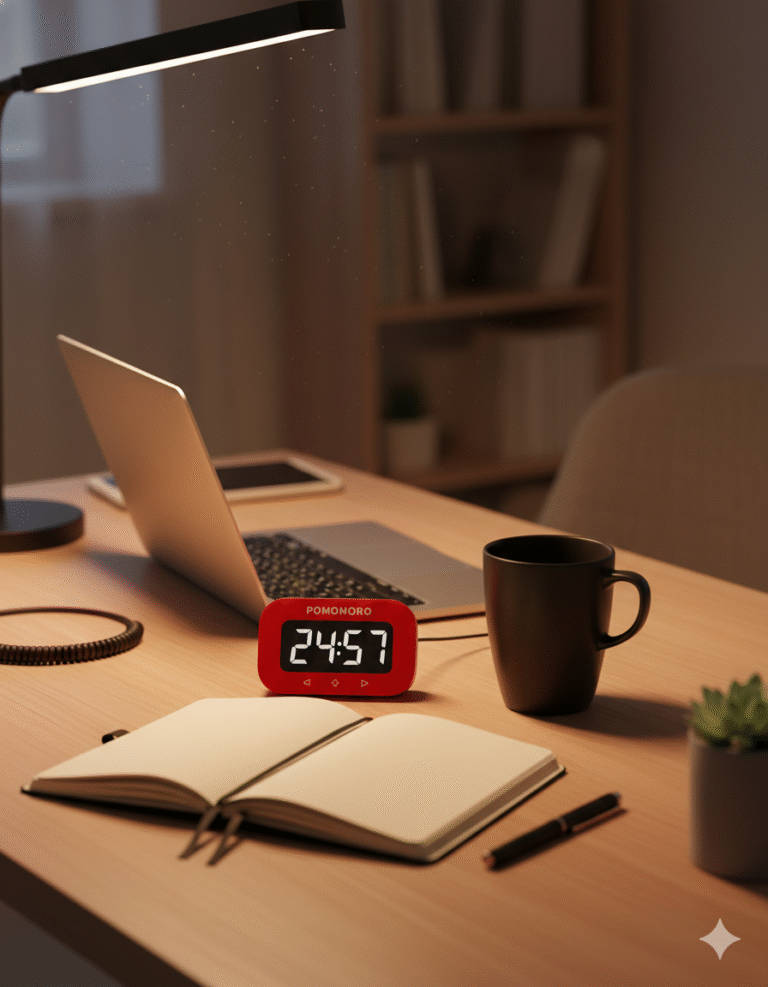
So I switched to shorter blocks.
Usually:
- 25–50 minutes studying
- short break
- repeat
Suddenly studying stopped feeling endless.
The Pomodoro Technique became one of the easiest ways to reduce mental fatigue.
A visual Pomodoro timer also helped because I stopped checking my phone every few minutes.
When You Have Too Much Syllabus and Start Panicking

Exam stress becomes dangerous when everything feels huge.
Whenever I told myself:
“I need to finish biology tonight.”
my brain resisted immediately.
Smaller goals worked much better.
Examples:
Instead of:
Finish chemistry
Try:
- revise one topic
- solve 10 questions
- summarize one chapter
Smaller targets reduced mental resistance.
And surprisingly, I usually ended up doing more.
When Different Subjects Feel Equally Difficult
One mistake I made:
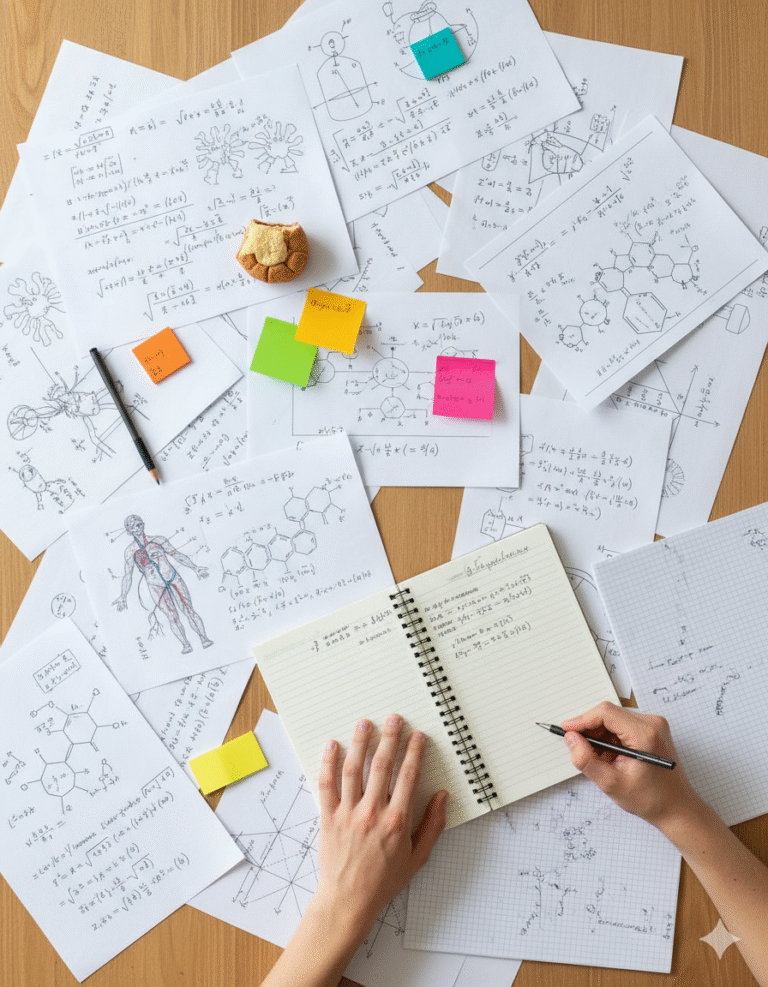
Using identical study methods everywhere.
That slowed everything down.
For Math
What helped:
- solving problems repeatedly
- practicing weak topics
- timed questions
Math improved once I stopped treating formulas like reading material.
For Science
Science became easier when I focused less on memorizing and more on understanding.
Helpful methods:
- diagrams
- active recall
- explaining concepts aloud
- practice questions
For Physics
Physics improved when I combined:
- formula understanding
- visualization
- numerical practice
- repeated problem solving
Trying to memorize physics mechanically made everything harder.
When You Feel Like You Must Study Perfectly
Perfectionism quietly caused a lot of stress for me.
I delayed studying because:
- notes weren’t perfect
- routine wasn’t perfect
- environment wasn’t perfect
Eventually I realized:
An imperfect study session still counts.
This mindset reduced burnout more than I expected.
What My Exam Week Routine Looks Like Now

I stopped using extreme schedules.
- practice questions
Evening:
- revision + active recall
Night:
- prepare materials for tomorrow
Simple.
But much easier to maintain.
The Things That Reduced Burnout More Than Study Hacks
These sound boring.
But they mattered.
- sleeping properly
- drinking enough water
- taking breaks
- reducing unrealistic goals
- avoiding all-nighters
Whenever these disappeared…
burnout returned.
Study Tools That Actually Helped Me
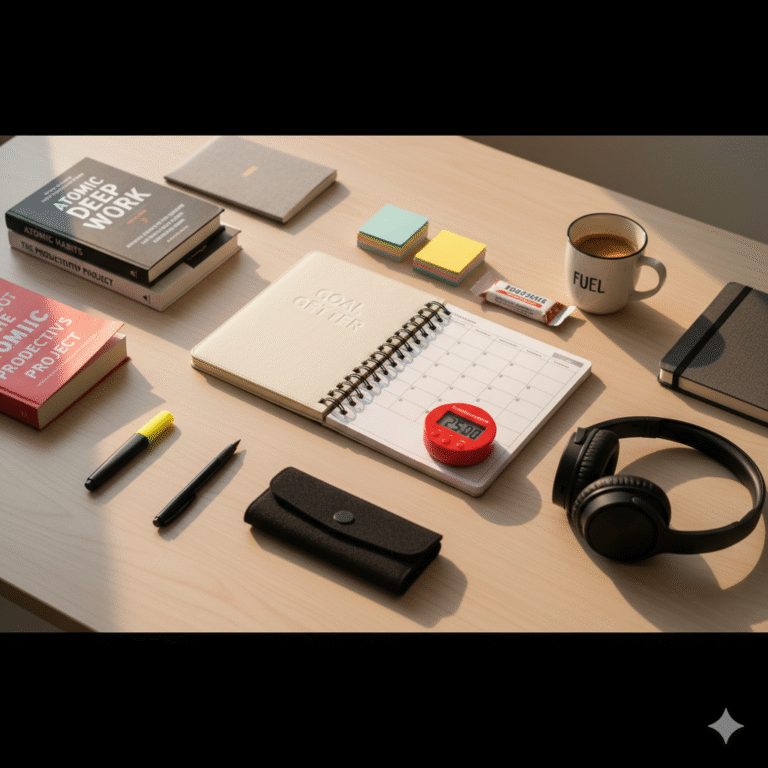
These didn’t magically improve grades.
But they made studying less chaotic.
Helpful Tools
Helped me understand why consistency matters more than motivation.
Made me realize how much distraction was damaging concentration.
Reduced phone checking during study sessions.
Made active recall easier.
Helped me stop creating unrealistic study schedules.
Common Study Mistakes That Still Hurt Performance
I still notice these everywhere:
- passive rereading
- multitasking
- all-night study sessions
- unrealistic schedules
- relying only on motivation
- studying without breaks
Most exam success comes from consistency.
Not intensity.
FAQ
How can I study effectively for exams?
Use active recall, practice questions, shorter study sessions, and realistic schedules.
What are the most effective study methods?
Active recall, practice testing, focused study blocks, and spaced revision work extremely well.
How do I avoid burnout while studying?
Reduce unrealistic schedules, sleep properly, and avoid treating studying like an emergency.
How many hours should I study?
The better question is: how long can you study consistently without exhaustion?
Final Thoughts

For a long time, I thought studying effectively meant studying more.
Now I think it means something else entirely.
Studying effectively means creating a system your brain can actually repeat.
Because exam success usually doesn’t come from one heroic study session.
It comes from showing up repeatedly without destroying your mental energy.
And honestly?
That approach feels much better too.