

Disclosure: This post may contain affiliate links. If you buy through these links, I may earn a small commission at no extra cost to you.
I used to think I was just bad at studying.
Seriously.
I’d sit at my desk, open my notebook, highlight a few lines… and then somehow end up checking my phone, scrolling videos, or staring at the same paragraph without understanding anything.
For the longest time, I thought the problem was laziness.
Big mistake.
That’s when I understood something that completely changed how I studied:
I wasn’t lazy — I was surrounded by distractions and using the wrong study methods.
Once I fixed my environment and used a few simple study hacks, focusing became easier.
Not perfect.
But dramatically better.
So if you’ve been wondering how to focus on studying, avoid distractions, and actually get work done, these are the best study hacks for students that genuinely helped me.
Why Is It So Hard to Focus While Studying?
Before fixing focus, it helps to understand what’s actually ruining it.
For most students, poor concentration usually comes from:
- Constant phone notifications
- No clear study routine
- Mental fatigue
- Multitasking
- Overwhelming study goals
- Poor sleep
I realized that focus isn’t really about “trying harder.”
It’s more about making concentration easier by removing what keeps breaking it.
1. Put Your Phone Somewhere You Can’t Reach

This was honestly the biggest game-changer for me.
I used to keep my phone next to me thinking, “I won’t check it.”
I always did.
Even seeing your phone can trigger distraction.
So now?
I put it in another room.
And my focus instantly improves.
What Actually Helps:
- Keep your phone outside your study area
- Turn on Do Not Disturb
- Use app blockers during study sessions
If your phone is beside you, your brain is already divided.
2. Use the Pomodoro Technique (My Favorite Focus Hack)
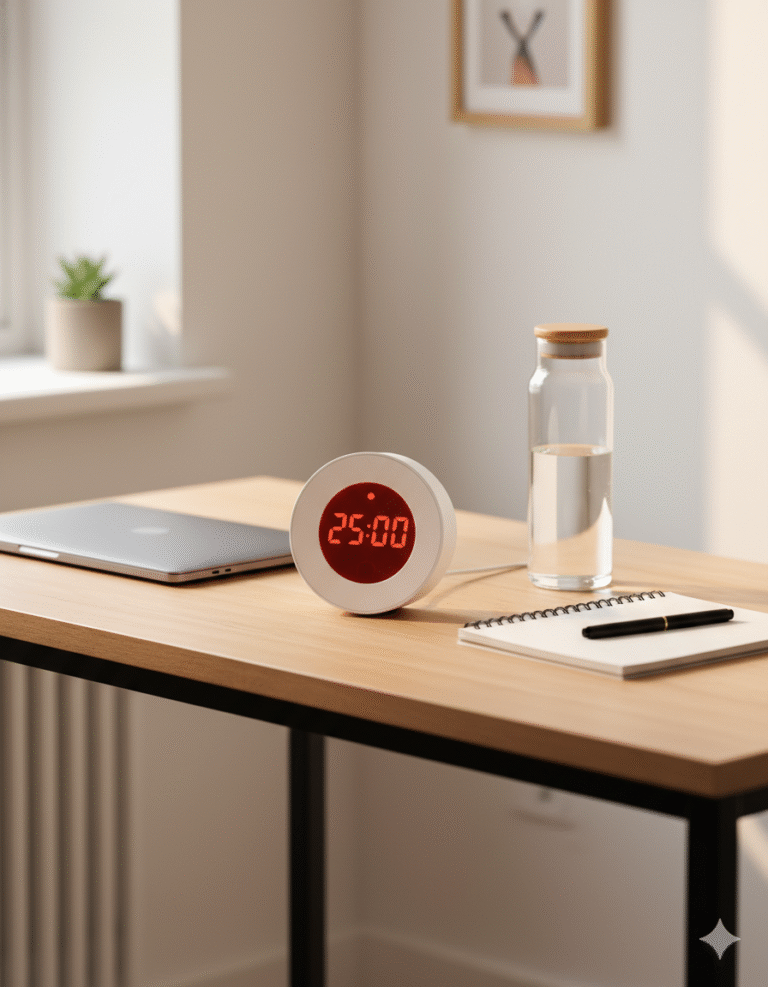
When I first tried studying for hours straight, I burned out fast.
Then I discovered the Pomodoro Technique.
And honestly… it made studying feel less painful.
Simple Pomodoro Method:
- Study for 25 minutes
- Break for 5 minutes
- Repeat 4 rounds
- Take a longer break
I realized short focus sprints were way easier than forcing myself to study for 3 hours.
This is one of the best study motivation tips if you procrastinate easily.
3. Start With the Hardest Subject First
Your brain has the most energy at the beginning.
So use it wisely.
Math? Science? The chapter you keep avoiding?
Do that first.
I noticed that once I finished my hardest task early, everything else felt easier.
This is sometimes called “eating the frog,” and it works because it removes mental dread.
4. Clean Desk = Clear Mind
I didn’t expect this to matter as much as it did.
But a cluttered desk made me feel mentally scattered.
Now I keep only:
- Notebook
- Pen
- Water bottle
- Main textbook
- Laptop (only if necessary)
That’s it.
Your study space should support focus, not compete for attention.
5. Use Active Recall Instead of Passive Reading

This was another huge mistake I made.
I used to reread notes again and again.
It felt productive.
But I remembered very little.
Then I switched to active recall.
Here’s How:
- Read one topic
- Close your notes
- Explain it from memory
- Check what you forgot
That’s when I understood studying isn’t about reading more.
It’s about remembering better.
6. Set Specific Study Goals
Saying “I’ll study chemistry” is too vague.
Your brain resists unclear tasks.
Instead, say:
“I’ll finish Chapter 2 equations and practice 10 questions.”
Clear goals reduce procrastination because you know exactly what to do.
7. Use Background Sound Strategically
For me, silence sometimes worked.
But on low-energy days?
Lo-fi or rain sounds helped a lot.
Try:
- Lo-fi beats
- Rain sounds
- Brown noise
- Instrumental music
If lyrics distract you, avoid them.
The goal is controlled stimulation — not more distraction.
8. Follow a Study Routine (So You Don’t Waste Mental Energy Deciding)
One of the best study hacks for high school students is having a simple timetable.
Because constantly asking “What should I study now?” wastes energy.
Simple Example:
- 4:00–4:30 PM: Math
- 4:35–5:00 PM: Biology
- 5:10–5:35 PM: English
I realized structure reduces resistance.
9. Protect Your Energy (Focus Needs Fuel)
Sometimes you don’t have a focus problem.
You have an energy problem.
Basics That Changed My Focus:
- Sleep 7–9 hours
- Drink more water
- Eat balanced meals
- Move your body daily
My concentration improved massively when I stopped sacrificing sleep.
10. Reward Yourself
This sounds simple, but it works.
Your brain responds to positive reinforcement.
Easy Rewards:
- Snack break
- One episode
- Social media after completion
- Walk outside
Studying became easier when I stopped treating it like punishment.
Common Mistakes That Destroy Focus
Lorem ipsum dolor sit amet, consectetur adipiscing elit. Ut elit tellus, luctus nec ullamcorper mattis, pulvinar
I made these constantly:
- Keeping my phone nearby
- Studying without a plan
- Pulling all-nighters
- Multitasking
- Studying too long without breaks
Consistency always beats last-minute cramming.
dapibus leo.
Best Study Tools That Actually Helped Me
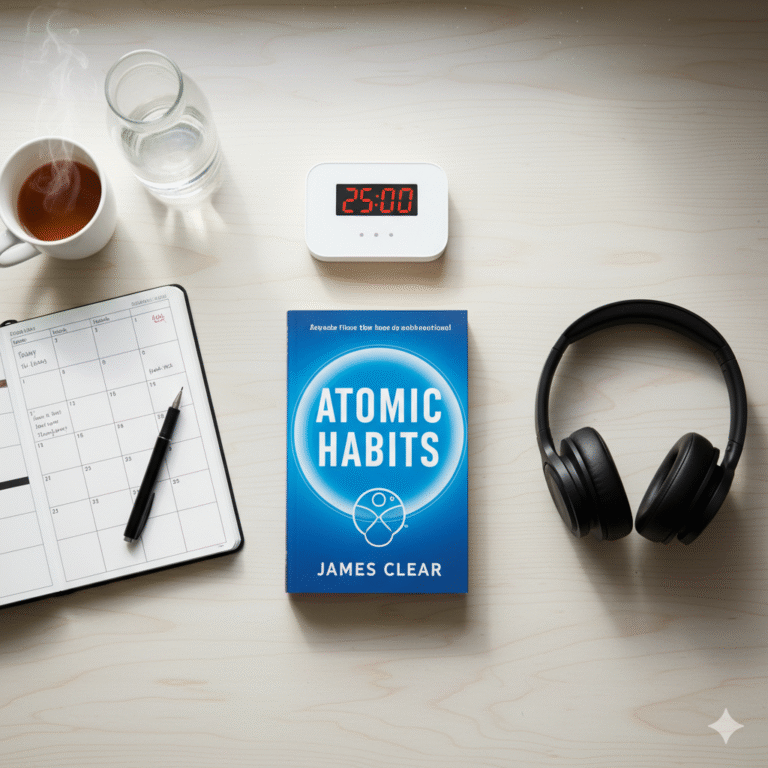
These didn’t magically make me smarter — but they made staying focused much easier.
Helpful Tools:
Atomic Habits by James Clear
Helped me understand why small routines matter more than motivation.
Deep Work by Cal Newport
Great if you struggle with constant distractions.
Visual Pomodoro Timer
A dedicated timer helped me stop checking my phone for time.
Noise-Canceling Headphones
Especially useful if your house is noisy.
Printable Study Planner
This made my weekly study routine feel realistic and organized.
Why these help:
The right tools reduce friction. They make focused studying easier, especially when discipline feels low.
My Personal 4-Step Focus Routine
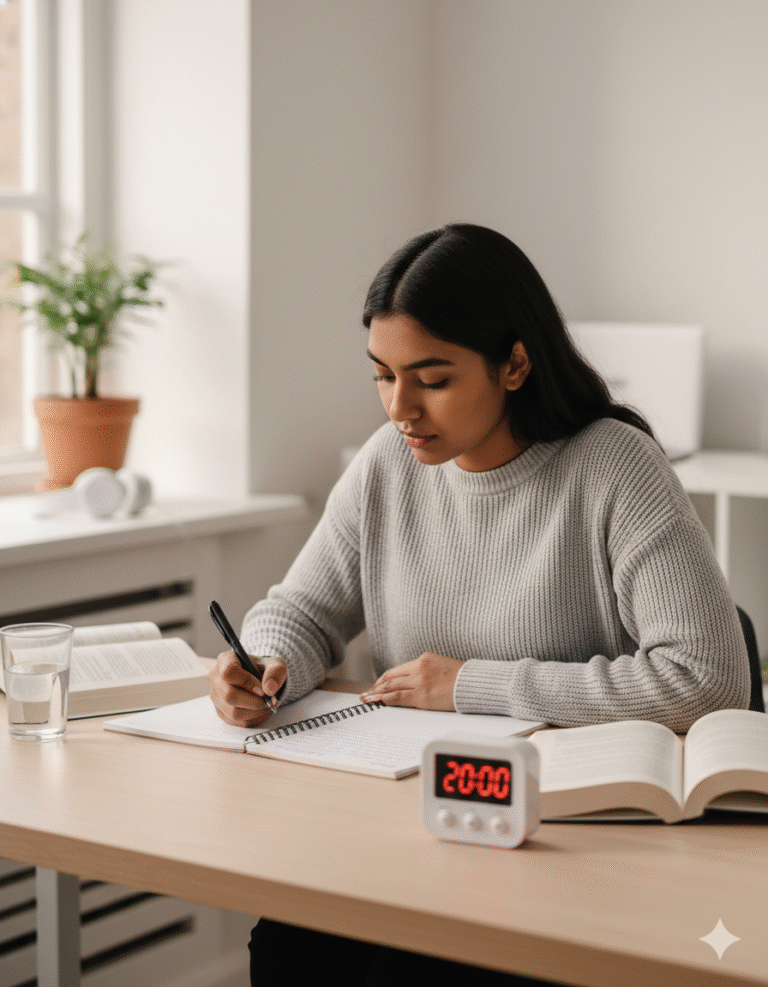
This is what genuinely worked best for me:
- Put phone away
- Set Pomodoro timer
- Focus on one task
- Take short break
Simple.
But this changed everything.
FAQ
How can I improve focus while studying?
Remove distractions, use active recall, and study in focused time blocks.
What are the best study hacks for students?
Pomodoro, phone removal, active recall, and specific study goals.
How do I avoid distractions while studying?
Keep your phone away, use blockers, and create a clean study space.
How long should I study?
25–50 minute focused sessions with short breaks usually work best.
Final Thoughts
If you’re struggling to focus, don’t immediately assume you’re lazy.
I realized most of us simply haven’t learned how to study in a distraction-heavy world.
Start small.
Put your phone away.
Set a timer.
Focus on one task.
Because the truth is:
You probably don’t need more study time — you need better focus systems.
Once I understood that, studying stopped feeling impossible.