
Feeling sick, exhausted, or completely low on energy—but exams are near? You are not alone. Exams don’t wait, but your study strategy can change. This guide covers 5 smart, low-energy study strategies that help you stay productive even when your body isn’t at its best.x`
Topics Covered in This Guide:
Study Effectively Even When Sick
How to Study When Sick
Study Smart When Feeling Tired
How to Study When Tired
Study Even When You Don’t Feel Like Studying
These techniques are designed to help you maintain up to 70% productivity during low-energy days using short study bursts, smart task selection, and recovery-focused planning.
Study Effectively Even When Sick
When you are sick, long study sessions are not realistic. The key is to conserve energy and study in short sprints.
Smart Study Rules When Sick:
Study in 15–20 minute sessions only
Focus on easy revision tasks, not new topics
Avoid studying in bed; use a chair or table if possible
Take medicine and hydrate before studying
Include 5–10 minute power naps between sessions
Short, focused sessions help you stay consistent without slowing recovery
How to Study When Sick
When your health is low, your study plan should shift into survival mode, not performance mode.
Simple Sick-Day Study Schedule (2–3 Hours Total):
8:00–8:20 AM: Flashcards (50 cards)
10:00–10:20 AM: Formula revision
2:00–2:20 PM: Solve 5 PYQs
4:00–4:20 PM: Trace diagrams or charts
8:00–8:20 PM: Review top 10 mistakes
Helpful Tips:
Drink warm water with honey to reduce congestion
Keep your head elevated for easier breathing
Use audio notes to reduce eye strain
Revise only high-priority (RED) chapters
Study Smart When Feeling Tired

Mental fatigue causes brain fog. When tired, switch to low-effort, high-retention tasks.
Study Hacks for Tired Days:
Passive revision using recorded lectures
Focus on diagrams, flowcharts, and visuals
Create one-page chapter summaries
Walk slowly while explaining concepts aloud
Use the 20-minute rule—stop when the timer ends
Avoid coffee crashes. Green tea and almonds are better for sustained energy.
How to Study When Tired
If you are physically tired, your brain needs structure and short cycles.
Tired-Day Focus Blueprint:
Preparation (2 minutes): Drink warm water
Study (20 minutes): Light tasks like MCQs or definitions
Break (10 minutes): Stretch and deep breathing
Repeat: Maximum 3 cycles
Power Nap: 20 minutes with an alarm
Avoid heavy problem-solving. Focus on formulas, definitions, and revision.
Study Even When You Don’t Feel Like Studying
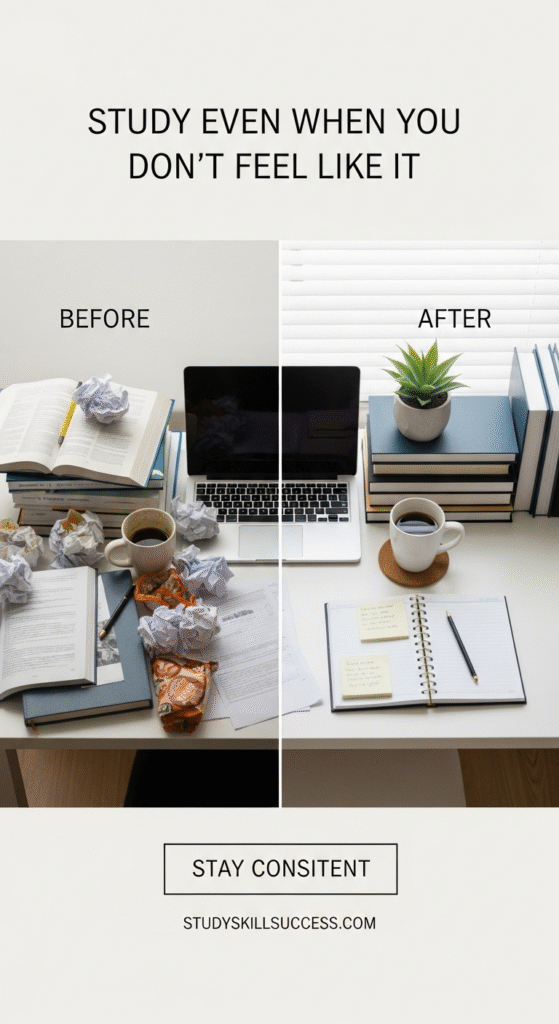
Lack of motivation is normal. The solution is psychological momentum, not willpower.
Motivation-Boosting Techniques:
2-Minute Rule: Commit to studying for just 2 minutes
Reward pairing: Study first, enjoy music or snacks later
Change environment: Balcony, window, or park bench
Celebrate tiny wins (even 5 MCQs count)
Message a friend to report your study time
Systems work better than motivation on low-energy days.
Complete 5-Day Sick or Tired Recovery Study Plan (Print Ready)
| Day | Energy Level | Study Type | Recovery Focus |
|---|
| 1 | Very Low | Flashcards (50) | Medicine + Rest |
| 2 | Low | PYQs (10) | Hot water + Nap |
| 3 | Medium | Diagrams (5) | Light walk + Audio |
| 4 | Good | Mini Mock | Stretch + Green Tea |
| 5 | Normal | Error Review | Full Routine |
Sick & Tired Study Tools Kit
Flashcard box (easy flipping)
Audio notes or recorded lectures
One-page laminated summaries
Timer for 20-minute sessions
Hot water bottle
Almonds or light snacks
Error log notebook
How Parents Can Support During Sick Study Days
Monitor medicine and rest times
Allow only light study sessions
Prepare healthy soups or light meals
Reduce phone distractions
Set nap timers
Encourage small achievements
Expected Recovery Results
Day 1: 20% productivity
Day 3: 60% normal capacity
Day 5: 90% recovery
Exam Time: No academic setback
Daily Nutrition for Sick or Tired Study Days
Morning: Warm lemon water
Breaks: 10 almonds
Afternoon: Clear soup
Evening: Banana for potassium
Night: Early sleep for recovery
Final Thoughts
Being sick or tired does not mean stopping completely. Short, smart study sessions protect both your health and your preparation. Focus on revision, rest properly, and let consistency—not intensity—carry you forward.
Start with a 20-minute flashcard session today, take your medicine, and let recovery work alongside preparation. 🔥📚🩺