
Practical, science-backed strategies for students who want faster learning, better recall, and stress-free subject mastery.
This blog covers these 5 high-impact study skills:
How to Study Fast and Remember More
How to Study Hard Without Getting Tired
How to Study Anatomy Easily
How to Study History
How to Study Better
Introduction
Studying isn’t just about sitting for long hours — it’s about how efficiently your brain processes, stores, and recalls information. Most students struggle not because they don’t work hard, but because they use outdated methods: passive reading, last-minute cramming, and zero structure.
This guide brings together the top 5 scientifically proven techniques for speed learning, long-term memory, and subject-specific mastery. Each method is simple, practical, and perfect for school, college, or competitive exams.
Let’s unlock smarter learning.
1. How to Study Fast and Remember More
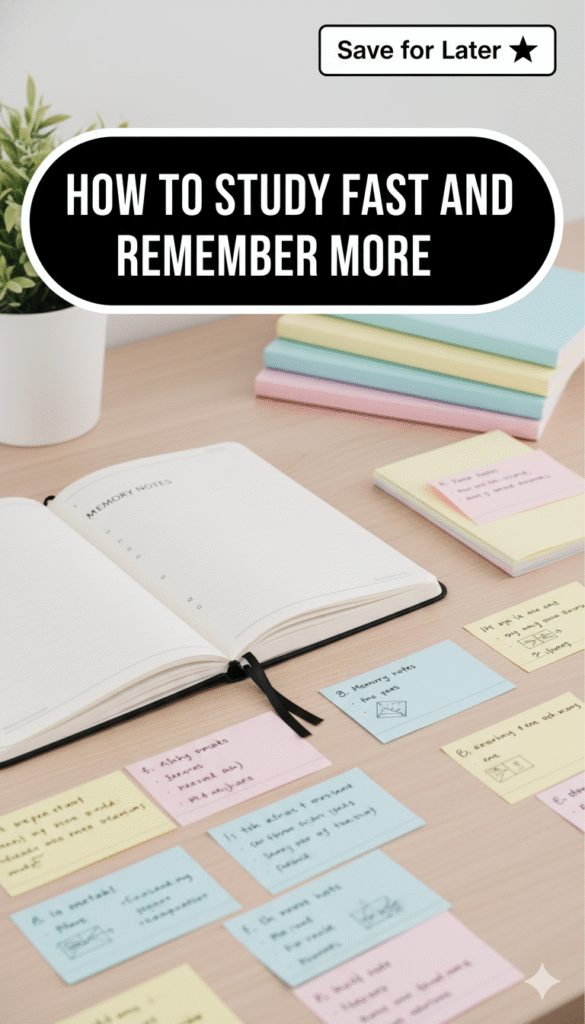
The Spaced Repetition + Active Recall Formula
This is the world’s most effective learning system — used by medical students and toppers worldwide.
Step 1: Learn the topic actively
Read the concept once.
Close the book and explain the topic in your own words.
Convert the chapter into questions.
Step 2: Recall without looking
Write or speak answers from memory.
If you forget something → revisit only that part and fix the gap.
Step 3: Follow the Memory Timeline
Day 1: Learn
Day 3: Review
Day 7: Review again
Apps like Anki or Quizlet automate this perfectly.
Use Mnemonics for tough concepts
Make funny associations or short acronyms.
Example:
VIBGYOR → Colors
ROYG BIV → Reverse order
Bones, muscles, historical terms become 3x easier.
Result:
You remember 3–5 times faster than cramming, and 10x longer.
2. How to Study Hard Without Getting Tired

Pomodoro + Energy Management System
You don’t get tired because of studying — you get tired because of poor study structure.
Use the Pomodoro Method
25 minutes deep focus
5 minutes stretch / walk
After 4 cycles → 20–30 minute long break
This keeps your brain in “peak alert mode.”
Fuel your brain right
Pre-study: nuts / fruits / light protein
During study: water every 30 minutes
No heavy meals while studying
Study in your peak productivity hours
Some students learn best at 6–9 AM.
Others peak at 6–10 PM.
Find your rhythm and schedule your hardest subject there.
Pro Memory Trick
Study aloud — speaking + hearing activates dual memory pathways.
Result:
You can study longer without fatigue, and your concentration becomes sharper cycle by cycle.
3. How to Study Anatomy Easily
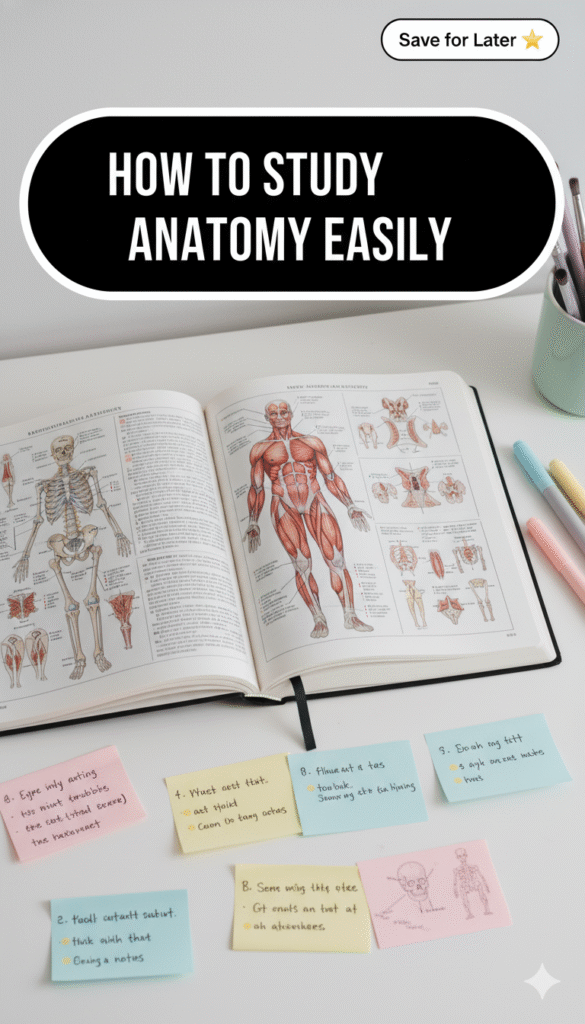
Anatomy feels overwhelming because it’s visual, detailed, and memory-heavy.
Use this simple Visual Chunking System.
1. Start with the big picture
Understand the entire system first:
Heart
Liver
Nervous system
Muscles
Bones
Never memorize in isolation.
2. Break into small chunks
Learn only 3–5 components per session:
Example (Heart): chambers → valves → blood flow.
3. Practice blank diagrams
Redraw diagrams from memory.
Label them without looking.
Do this 8–10 times until your mind automatically fills gaps.
4. Use 3D tools
Apps like Complete Anatomy or 3D YouTube models help you visualize structures exactly as they appear in real life.
Result:
Daily 30-minute diagram practice beats 2 hours of rote learning. Anatomy becomes logical instead of stressful.
4. How to Study History

History is not about memorizing thousands of dates — it’s about understanding the story of what happened and why.
1. Timeline Method
Create a visual timeline on paper or Notion:
Mark important years and events
Add arrows for causes and consequences
This instantly makes chronology clear.
2. Story Technique
Turn historical events into stories.
Example:
Instead of memorizing
“Akbar → Din-i-Ilahi → 1582”
Think of it as:
“Akbar created a new spiritual club in 1582 to unite his diverse empire.”
Storytelling improves memory by 80%.
3. Mind Mapping
Write the main era in the center (e.g., Mughal Empire)
Add branches for:
Rulers
Battles
Policies
Impact
4. Active Recall Questions
Ask yourself:
“What happened in 1857?”
“Why was the Bengal famine important?”
“Which ruler introduced land reforms?”
Say the answers aloud or write them quickly.
Result:
History becomes structured, logical, and impossible to forget.
5. How to Study Better (Overall Efficiency System)
1. Interleaving Subjects
Study multiple subjects in one session:
25 min Maths
25 min Physics
25 min English
This builds deeper neural connections and boosts speed.
2. Practice Testing
Learning improves only when tested.
Use:
Past papers
Flashcards
Self-quizzes
Mock tests
3. Teach Someone
Explain a topic to a friend or speak to yourself in the mirror.
Teaching is the highest form of learning.
4. Night Recap Routine
Spend 10 minutes before sleeping reviewing:
What you studied
What was difficult
What needs revision
Sleep strengthens memory pathways more than anything.
Result:
You reduce study time but double learning quality.
Deep Insight
Studying fast doesn’t mean rushing through chapters — it means learning in a way that your brain naturally remembers without stress.
Consistency beats intensity.
Smart systems beat long hours.
When your study methods work with your brain instead of against it, learning becomes effortless.
Quick Action Plan (Start Today)
Today:
Use Pomodoro for 4 cycles
Do spaced repetition on one chapter
Tomorrow:
Label one anatomy diagram
Make one history timeline
In 7 days:
Your speed increases, memory improves, and confidence grows automatically.